The Winter Solstice festival (Dong Zhi festival) is one of the most important festivals celebrated by Chinese and other East Asians. The Dong Zhi festival is also a time for the family to get together on the 22nd of December.
During these festival family get together to make and eat tang yuan or balls of glutinous rice, which symbolize reunion. The pink and white tang yuan is symbolized family unity and prosperity. The Dong Zhi festival is also a reminder that we are now a year older and should behave better in the coming year.
Tang yuanare made of glutinous rice flour and sometimes brightly colored, and usually colored in pink. The flour balls (tang yuan) may be plain or stuffed, and normally stuffed with brown sugar. They are cooked in a sweet soup with both the ball and the soup served in one bowl.
The one thing common to most job applications is the curriculum vitae (CV) or resume. This two to three page document is expected to contain the applicant’s employment history, special achievements and relevant personal details. Unfortunately, many applicants fail to craft their CVs properly and end up failing to snag a job interview. Here are the top five mistakes that job applicants make when they design their CVs:
1. Too fanciful
Many job applicants think that the CV is an invitation card or a fashion art piece. They put in fanciful fonts, insert little shapes and pictures, and even change the font sizes, all the time thinking that this demonstrates creativity on their part. However, it is important to remember that the CV is actually a formal document for your future employer’s consideration. It may not sit very well with an executive recruiter who is short of time and just wants simple facts. Besides that, an overly fanciful CV may also tell the recruiter that the applicant is not professional and is not serious about the job.
2. Too long-winded
Some job applicants have significant job experiences. When they write their CVs, they list all their previous positions and make a long list of the responsibilities that they held in each position. This makes their CV long and boring, especially for the recruiter who has to read through hundreds of CVs. Besides, over-emphasizing your job responsibilities may also make you seem like a show-off.
3. Too personal
Some job applicants think that the more personal details they give, the more accessible they will appear to the recruiter. They put in details such as their NRIC number and all their contact number. Some of these details are not even useful when the recruiter assesses the candidates’ suitability for the job. Another problem is that the applicant’s privacy may be compromised if overly private information like the NRIC number is available to many companies at a time.
4. No contact details
There are job applicants who prepare well-written CVs with most of the important details such as, employment history, references and education history, and everything except their contact information. Imagine an employer looking through such a CV. He/she is impressed by the candidate’s accomplishments and experience. He/she is about to ring the candidate’s up for an interview. And lo and behold, there is no contact number on the document. And there is nothing on the cover letter either. Even with the best intentions, the recruiter will never be able to meet this candidate.
5. Not job-specific
The average job-seeker submits his/her CV to more than one company, by using the same document for all his/her job applications. In this cookie-cutter CV, the candidate tends to list all his/her skills and experience. But this is useless to the employer if he/she is looking for a candidate who can fulfill specific job requirements, but all the skills listed in the CV are not relevant to the job. This is very important point that applicants have to remember. Design a CV for each job, tailoring the information to meet its specific requirements.
Important tips to remember, writing a CV is not a walk in a park, so don’t just list all the information without a thought. Always make sure your CV has enough relevant details to interest the hiring manager without overwhelming the hiring manager. Moreover, make sure there are no spelling and vocabulary errors that may compromise your chances of getting a job interview. In additional, when you are crafting your CV or updating it, bear these points in mind for a better chance at impressing prospective employers.
Bibliography: 1. Article by Linus Tham, founder and director of the C.V Plus Group, a CV writing and design consultancy.
2. “Beware The Top Five Blunders.” The Star Metro Classifieds. [Malaysia] 4th November 2009. Page#01.
It is important that employee or business people demonstrate courteous telephone behavior when taking to clients and other business contacts. Courtesy and thoughtfulness are the basic components of telephone etiquette. The knowledge of etiquette makes telephoning easier because if you creatively obey the rules, you will be confident that you will behave in the most appropriate and productive way. Here are some guidelines for polite and effective telephone usage for you or employee, especially receptionist or secretary.
1. When answering the phone in the office, immediately identify your company, department and your name.
2. When talking to customers, call them by name. By repeating the name, you are more likely to remember it the next time.
3. Know how you sound to others. You can find this out by recording your voice. Then critique your tone, manners, friendliness and vocal quality.
4. Always use the hold button if you must temporarily leave the phone. It is surprising what the person on the line can hear, and you may inadvertently embarrass yourself or the other person.
5. Excuse yourself when leaving the line. A simple one, “One minute, please, Miss J.” Then make sure you reassure the customer every 20 to 30 seconds that you have not forgotten her. If you must do this more than twice, it is probably better to call back when you are able to talk.
6. Listen. Allow your caller to talk and encourage her input. No one likes to be “talked at”. When pauses occur, don’t interrupt until the caller is finished with her thought. Listen for ideas, not just words, and take brief notes to jog your memory later.
7. Keep a notepad and pen near the phone so you can quickly write messages or notes.
8. Screen calls for the caller’s name by asking: “Who’s calling please?” When transferring a call, say, “Thank you Miss S. I’m ringing Miss J now,” or “Thank you Miss S. Miss J is on another line at the moment. Would you prefer to hold for a minute or would you prefer that Miss J return your call?” If Miss J is unavailable, say, “Thank you. Miss S, Miss J is out of the office now and isn’t expected back till 4 o’clock. Miss R may be able to help you, or would you prefer that Miss J return your call?”
9. Let them hang up first. Have you ever concluded a conversation with someone and just as they were hanging up, you thought of one more things to say? To avoid cutting off the caller’s thoughts, let the caller hang up first.
10. When calling long distance, tell the secretary. People give long distance calls a higher priority than local calls. If she or he says, “Do you mind if I put you on hold?” Be careful. Some people are not in the habit of checking back with the caller every 20 to 30 seconds. Your best bet is to tell the secretary that you can only remain on hold a short time.
Bibliography: 1. Article by Dr Tony Alessandra, the author of 13 books, counsultant and keynote speaker. 2. Alessandra, Tony. “It’s Your Call.” The Star Metro Classifieds. [Malaysia] 18th September 2008. Page#01.
Be professional On the day of your interview, arrive on time and dress professionally. Even if the company has a casual work environment, your first appearance should always be formal. Always keep your demeanor or manner professional regardless of how the interview plays out and whether you are offered employment.
Take your time Pause to think through a question before responding. Remember, your time is just as important as the interviewer’s. Even though you should try to answer as promptly and directly as possible, it is important that you provide meaningful answers to each question.
Act with grace While this may sound like simple advice, remembering to say “thank you”, shaking hands, maintaining good eye contact and giving a warm smile are all necessary to portray a positive work attitude. Be polite towards every person you encounter or meet. While making a great impression during the interview is important, your top priority should be projecting yourself as a true professional who would be an asset or benefit to any employer.
Bibliography: Hird, Tim. “Make A Good Impression.” The Star Metro Classifieds. [Malaysia] 30th July 2008. Page#01.
Silver accessories add a more distinguished touch when entertaining. That is, unless they are covered in unsightly tarnish.
1. Cover the bottom of the pan with aluminum foil. 2. Arrange the silver pieces on the foil so they're all touching the foil. 3. Heat some water, enough to cover the silver pieces. Add a small amount of salt. 4. Add a cup of baking soda to the hot salt water solution. 5. Pour the solution over the silver pieces. 6. Soak the silver in the solution for 30 minutes. 7. Remover the silver pieces and buffs them dry with a soft cloth.
Bibliography: “How to Clean Silver.” The Star Metro Classifieds. [Malaysia] 29th July 2008. Page#01.
fi yuo cna raed tihs, yuo hvae a sgtrane mnid too. Cna yuo raed tihs? Olny 55 plepoe out of 100 can. i cdnuolt blveiee taht I cluod aulaclty uesdnatnrd waht I was rdanieg. The phaonmneal pweor of the hmuan mnid, aoccdrnig to a rscheearch at Cmabrigde Uinervtisy, it dseno't mtaetr in waht oerdr the ltteres in a wrod are, the olny iproamtnt tihng is taht the frsit and lsat ltteer be in the rghit pclae. The rset can be a taotl mses and you can sitll raed it whotuit a pboerlm. Tihs is bcuseae the huamn mnid deos not raed ervey lteter by istlef, but the wrod as a wlohe. Azanmig huh? yaeh and I awlyas tghuhot slpeling was ipmorantt!
A graphic design project may involve the presentation of existing text and image, such as with a newspaper story which begins with the journalists and photojournalists. It then becomes the graphic designer's job to organize the page into a reasonable layout and determine if any other graphic elements should be required. In a magazine article or advertisement, often the graphic designer or art director will commission photographers or illustrators to create original pieces just to be included into the design layout. Current design practice has been extended to the modern computer, for example in the use of WYSIWYG (What You See Is What You Get) user interfaces, often referred to as interactive design (IxD), or multimedia design.
Page layout Page layout is the part of graphic design that deals in the arrangement and style treatment of elements (content) on a page. Beginning from early illuminated pages in hand-copied books of the Middle Ages and proceeding down to intricate modern magazine and catalog layouts, proper page design has long been a consideration in printed material. With print media, elements usually consist of type (text), images (pictures), and occasionally place-holder graphics for elements that are not printed with ink such as die/laser cutting, foil stamping or blind embossing. Printmaking Printmaking is the process of making artworks by printing, normally on paper. Except in the case of monotyping, the process is capable of producing multiples of the same pieces, which is called a print. Each piece is not a copy but an original since it is not a reproduction of another work of art and is technically known as an impression. Painting or drawing, on the other hand, creates a unique original piece of artwork. Prints are created from a single original surface, known technically as a matrix. Common types of matrices include: plates of metal, usually copper or zinc for engraving or etching; stone, used for lithography; blocks of wood for woodcuts, linoleum for linocuts and fabric plates for screen-printing. But there are many other kinds, discussed below. Works printed from a single plate create an edition; in modern times usually each signed and numbered to form a limited edition. Prints may also be published in book form, as artist's books. A single print could be the product of one or multiple techniques. Typography Typography is the art, craft and techniques of type design, modifying type glyphs, and arranging type. Type glyphs (characters) are created and modified using a variety of illustration techniques. The arrangement of type is the selection of typefaces, point size, line length, leading (line spacing) and letter spacing. Typography is performed by typesetters, compositors, typographers, graphic artists, art directors, and clerical workers. Until the Digital Age, typography was a specialized occupation. Digitization opened up typography to new generations of visual designers and lay users. Web design Graphic designers are often involved in web design. Combining visual communication skills with the interactive communication skills of user interaction and online branding, graphic designers often work with web developers to create both the look and feel of a web site and enhance the online experience of web site visitors. In the job field, many companies look for someone who can do both graphic design and the web application development involved in web design, including programming. There is a great deal of debate in the professional design community about whether this trend is positive, or if graphic designers are being over-tasked with unrelated skills and disciplines. A collaborative web-design team may split the tasks between graphic designers and software engineers.
What is sexual harassment? Sexual harassment is unwelcome attention of a sexual nature that makes someone feel uncomfortable. In other words, sexual harassment is unwanted sex-related behavior toward someone. How about sexual harassment at the workplace? Sexual harassment at the workplace occurs when one employee makes continued or unwelcome sexual advances, or requests for sexual favors, and other verbal or physical conduct of a sexual nature, toward another employee. Furthermore, sexual harassment at the workplace is not only occurs inside the office but it also occurs outside the office, such as work-related social gathering or functions, conferences, workshop and training sessions.
Sexual harassment at the workplace is generally classified into two different categories. The first categories is sexual coercion is known as “quid pro quo” harassment. "Quid pro quo" means "this for that" or "giving something for something", which mean seeking sexual favors or advances in exchanging for work benefits. For example, the boss promises the female employee certain benefits, such as will increase her salary or promote her to be a supervisor, if she responds to his sexual advances or demands. If she refusal to do it, the boss will threat her badly or even fire her. The second categories of sexual harassment at workplace are called sexual annoyance, it is also known as “hostile work environment”. A “hostile work environment” exists when an employee experiences workplace harassment and fears going to work because of the offensive, intimidating, or oppressive atmosphere generated by the harasser. For instance, a “hostile work environment” harassment occur when the harasser makes unwelcome sexual nature, such as offensive teasing, sending pornography picture, unnecessary touching toward another employee, and cause the employee fear going to work. However, “quid pro quo” harassment and “hostile work environment” harassment will affect the victim's work performance.
Type of sexual harassment, there are 5 different types of sexual harassment. Firstly, a verbal harassment is in oral form and includes uncomfortable and offensive teasing, joking, questioning, or making suggestive comment, remarks or sounds, or even verbal whistles. Secondly, a non-verbal harassment is expressed in a non-verbal manner, such as body gestures, hand signal, lips licking or food eating and persistent flirting. Thirdly, a visual harassment is in a form of showing sexually-oriented visuals, for instance, by showing posters, drawings, photos, screen-savers or emails of a sexual nature, such as by showing a pornography picture. Fourthly, psychological harassment, psychological harassment harms a person's psychological well being and includes oppressively constant proposals for dates, repeated undesirable physical intimacy or social invitations. And lastly is physical harassment. Physical harassment involves physical contact, for instance touching or grabbing any part of a person, such as caressing, massaging, pinching, hugging, kissing, and sexual intercourse. In short, there are 5 different types of sexual harassment, which is verbal, non-verbal, visual, psychological and physical harassment.
How to confront and stop sexual harassment or harassers at workplace? There are few ways to confront and stop sexual harassment or harassers. The first way is speak up at the time. Be sure to say "NO" or “DON’T TOUCH ME” directly, clearly, firmly and without smiling to the harasser that is the best way to let the harasser know that his behavior is offensive. The second way is set your own boundaries. Say "NO" forcefully and clearly when you are asked to do something or respond to some questions or even engage in a situation that make you feel uncomfortable. The third way is be aware of situations and people who may harm you. Don't ignore any warnings about particular people or social settings. The fourth way is trust your own instincts about possible danger. In an uncomfortable situation, be direct and honest remove yourself from the situation immediately. And the last way is telling someone or report to someone. Don’t keep it to yourself. Being quiet about sexual harassment lets harasser continue.
However, the workplace should not be a sexually provocative place. Be careful of sending the wrong signals. And we should dress, behave and communicate accordingly. Furthermore, if you are harassed, don't blame yourself. Sexual harassment is not something someone "asks for" or "deserves". It is not your fault. Blame the harasser. Moreover, don't keep it to yourself and don't delay or try to out-wait the situation, being quite and delaying will only lets the harassers continue. Thus, if you need any help, feel free to contact a non-government organization or a social agency such as WAO (Women's Aid Organization). Their will definitely help you.
The word Graphic Design can refer to a number of artistic, creative, imaginative and professional disciplines which focus on visual communication and presentation. Various methods are used to create and combine symbols, images or words to create a visual representation of ideas and messages. A graphic designer may use typography, visual arts and page layout techniques in varying degrees to produce the final result of the project. Graphic design often refers to both the process (designing) by which the communication is created and the products (designs) which are generated.
Common uses of graphic design include magazines, advertisements, product packaging and web design. For example, a product package might include a logo or other artwork, organized text and pure design elements such as shapes and color which unify the piece. Composition is one of the most important features of graphic design especially when utilizing pre-existing materials or using various elements.
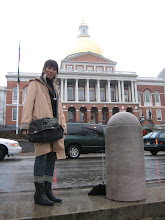
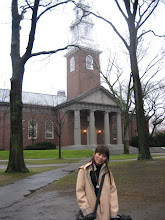
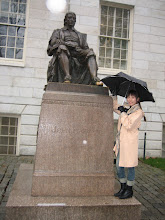
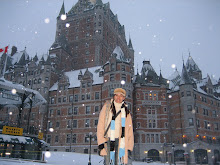
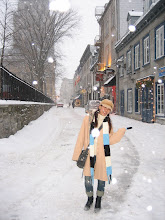
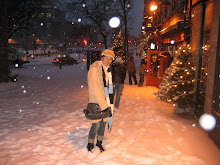
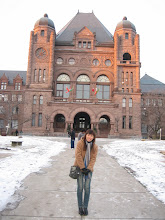
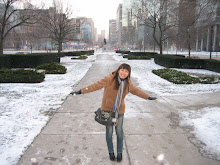
About me!
I’m Joee Lam,
u can call me Joee,
cantonese is my native language,
I'm a pure Chinese Malaysian,
worked as assistant marketing manager,
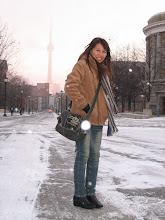
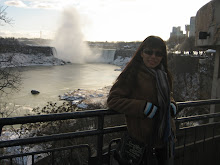
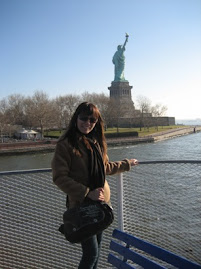
love traveling, shopping, gossiping,
love korean & japaness music,
drama, movies, tv show, nothing special, not really addicted,
love cycling,
golfing is recent sports i play, beginner level,
can ‘t dive without an awesome instructor / buddy, feel insecure because i can't swim,
can dance, basic social dance / ballroom dance,
love local, thai & korean food, especially kim chi










+080.jpg)